Easy Lock Cable Tie
Self-locking stainless steel cable tie for permanent, tamper-proof cable securing in harsh environments. Available in 305 or 316 stainless steel. Suitable for marine and industrial land applications.
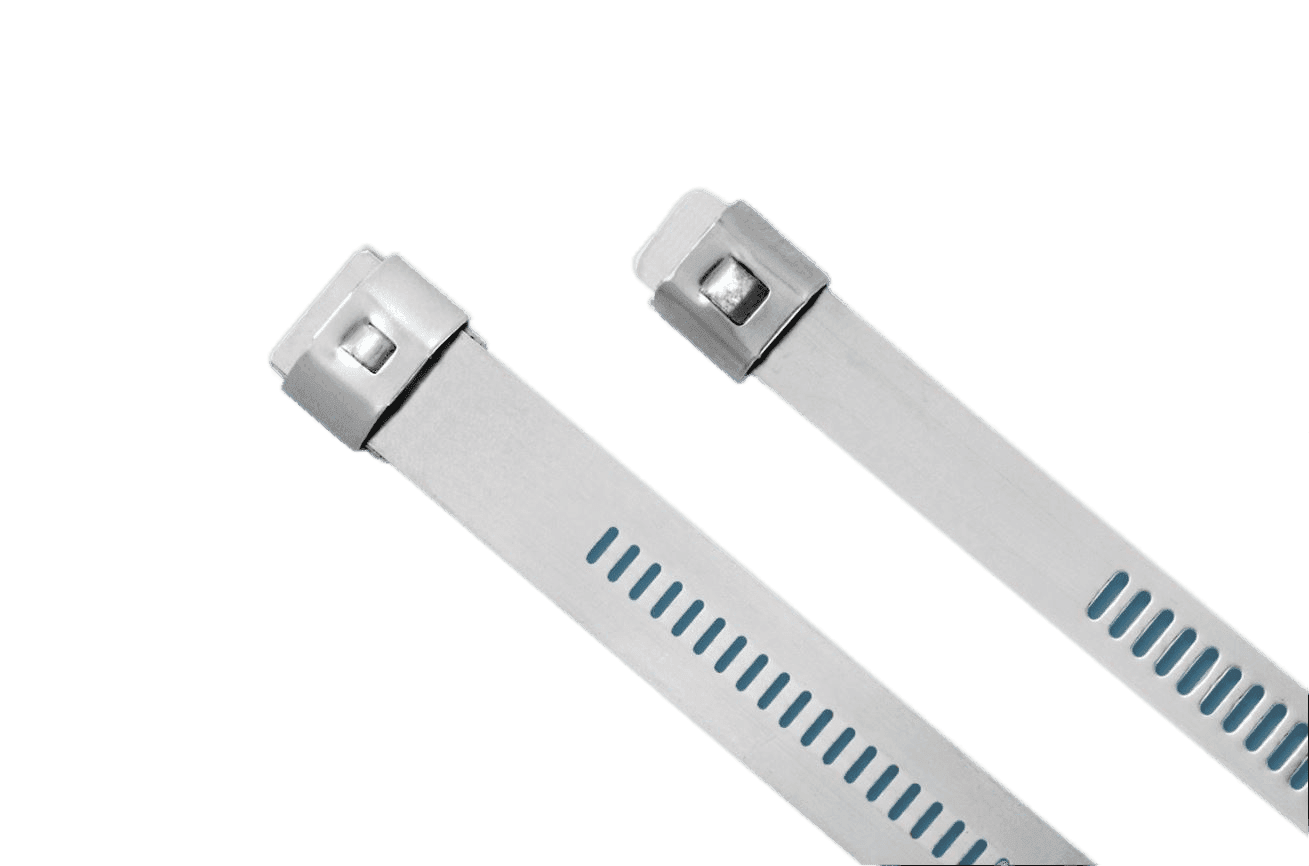
The Easy Lock Stainless Steel Cable Tie provides permanent fastening for industrial cable management. The integrated self-locking mechanism enables installation without specialized tools while maintaining high tensile strength under load. Material composition and finish options support deployment across indoor, outdoor, and marine environments.
Stainless steel construction resists corrosion and oxidation in salt-spray and high-humidity conditions. The tie's tamper-proof design prevents accidental or intentional cable displacement, making it suitable for critical infrastructure and vessel applications.
APPLICATIONS
Primary use cases.
Marine Vessels
Cable securing on commercial and industrial vessels where salt-spray corrosion and vibration resistance are critical.
Industrial Land Infrastructure
Outdoor cable management in power distribution, telecommunications, and industrial facilities requiring permanent, tamper-proof fastening.
Harsh Environment Applications
Indoor and outdoor installations where environmental exposure demands corrosion-resistant fastening solutions.
TECHNICAL DATA
Complete specifications and tolerances for the Easy Lock Cable Tie.
| PARAMETER | SPECIFICATION |
|---|---|
| Material Options | Stainless Steel 305 or 316 (uncoated) |
| Locking Mechanism | Integrated self-locking |
| Installation Method | Low-effort manual installation |
| Primary Function | Permanent cable securing |
| Tamper Resistance | Tamper-proof design |
| Environmental Rating | Indoor, outdoor, and marine environments |
REGULATORY COMPLIANCE
Validated by the world's leading maritime classification societies.
Stainless Steel 305/316
Available in 305 or 316 stainless steel. Grade 316 offers enhanced corrosion resistance in marine environments due to molybdenum content.
TECHNICAL FAQ
Common specifications and regulatory inquiries.